In a dental office, the air compressor is invisible until it fails, and then the handpieces, air-water syringes and other air-driven equipment stop. Dental air also has to be clean and dry, because it touches patients and instruments. This guide covers what to look for in a dental air compressor, how to size it, and which Schulz oil-free models fit small and large practices.
Why dental offices use oil-free compressors
An oil-lubricated compressor can pass tiny amounts of oil vapor into the air stream. In a shop that’s handled with filters; in a dental operatory it’s a contamination risk. Oil-free (oilless) compressors have no oil in the compression chamber, so there’s nothing to carry over. That’s why practices standardize on oil-free units. For the basics, see when to use an oil-free air compressor.
Dry air matters as much as clean air
Compressing air concentrates the moisture in it. Wet air can rust handpiece bearings, grow bacteria in lines and tanks, and affect bonding materials. A dental air system should include:
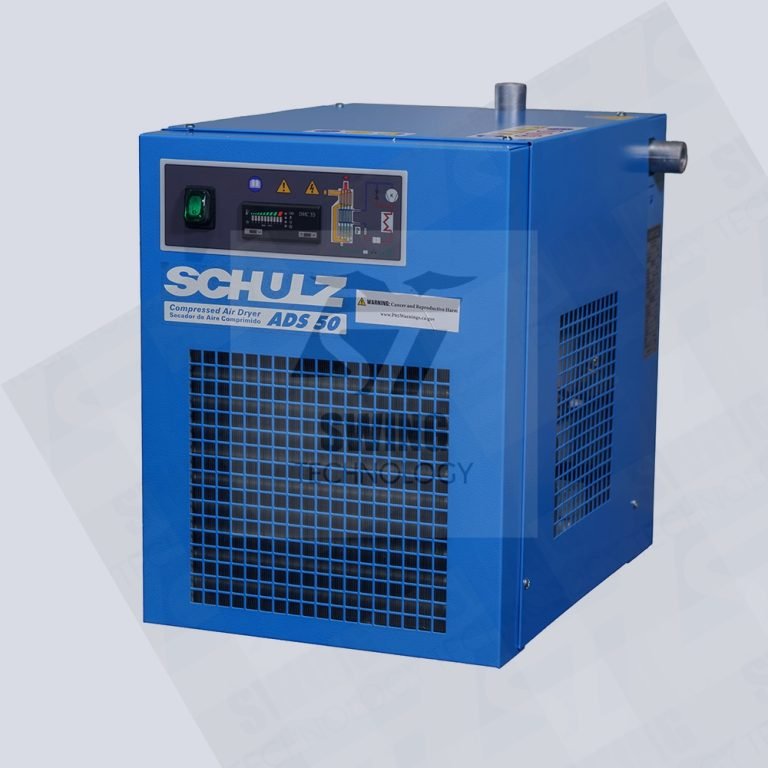
- A dryer. Many dental equipment makers specify very dry air. A refrigerated dryer such as the Schulz ADS-10 or ADS-15 removes most moisture. Some equipment calls for a desiccant dryer to reach a lower dew point, so check your manufacturer’s requirement. Learn more in dew point explained.
- Filtration after the dryer to catch particles. See how to choose the right inline filter.
- An automatic tank drain, so water doesn’t sit in the tank between service visits.
How to size a dental air compressor
- Count the chairs that run at the same time. Size for peak use, not the total number of operatories.
- Check each chair’s air requirement. Your dental unit’s manual lists air consumption per chair, usually in CFM or liters per minute (28.3 L/min = 1 CFM). Add any other air-driven equipment such as lab handpieces or sandblasters.
- Add a 25–30% margin for growth and leaks. A practice that adds a chair in two years shouldn’t need a new compressor.
- Consider redundancy. Larger practices often use two smaller pumps or a duplex system, so one can run while the other is serviced.
- Plan the location. Oil-free compressors still make noise. A closet or mechanical room with good ventilation keeps sound away from patients. Cabinet models help in tight spaces.
Schulz oil-free compressors for dental practices
| Model | Output | Tank | Good for |
|---|---|---|---|
| MSV 6 (1 HP) | 6 CFM, 125 PSI | Small tank | Single-chair offices, labs, backup air |
| MSV 6 with cabinet | 6 CFM, 125 PSI | In a sound-reducing cabinet | Small offices where noise is a concern |
| CSD 9 (1.5 HP) | 9 CFM, 125 PSI | 8 gal | Small practices |
| MSV 12/100 (2 HP) | 12 CFM, 125 PSI | 26 gal | Growing practices |
| CSD 18 (dual motor) | 18 CFM | 30 gal | Multi-chair practices; two motors share the load |
| CSV 15 (3 HP) | 15 CFM, 125 PSI | 70 gal | Larger practices that want more storage |
| CSV 20 (5 HP) | 20 CFM, 125 PSI | 70 gal | Large practices and clinics |
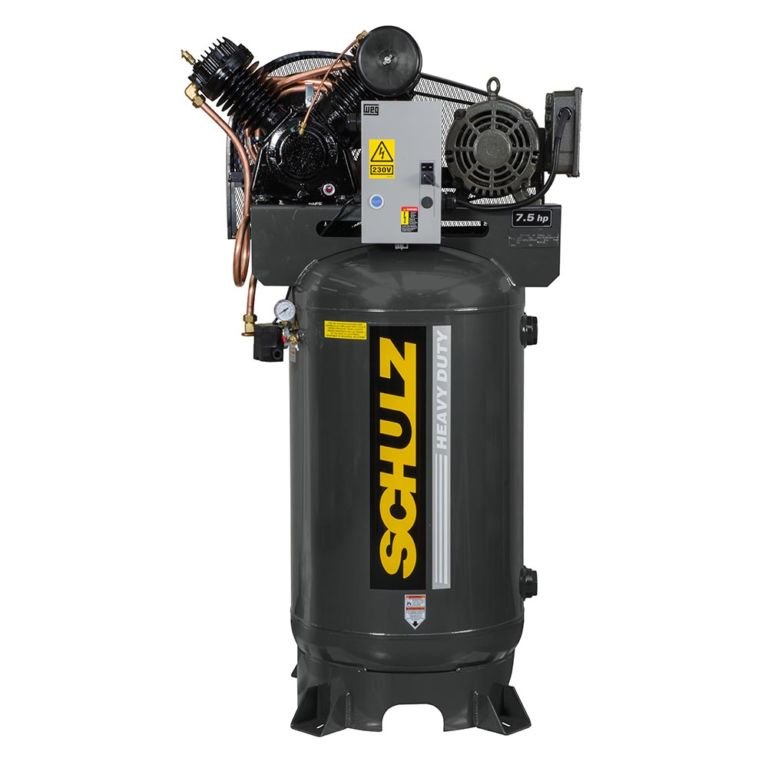
For quiet, continuous oil-free air in larger clinics, a Schulz scroll compressor is another option. Scroll units are oil-free and very quiet. Browse all Schulz oil-free compressors.
Keeping a dental compressor healthy
- Drain the tank daily, or install an automatic drain.
- Replace intake filters on schedule. Oil-free compressors depend on clean intake air.
- Service the dryer and line filters so dry, clean air keeps reaching the chairs.
- Listen for changes. Longer run times or new noises usually mean leaks or worn parts.
- Keep the room cool. Heat shortens the life of oil-free pumps.
Our post on maintaining an oil-free compressor goes into more detail.
Frequently asked questions
Can I use a regular shop compressor in a dental office?
We don’t recommend it. Oil-lubricated shop compressors can pass oil into the air. Dental offices should use oil-free compressors with a dryer and filtration.
How much CFM does a dental chair need?
It depends on the equipment, so check your dental unit’s specifications for its air consumption per chair. Multiply by the number of chairs used at the same time, then add 25–30%.
Do I need an air dryer for a dental compressor?
Yes. Moisture damages handpieces and lines and can support bacterial growth. Follow your equipment maker’s dew point requirement.
Are there codes for dental air?
Requirements vary by state and facility type. Check with your dental equipment dealer, installer or local authority before installing.
Setting up a new office or replacing an old compressor? Tell us how many chairs you run and what equipment you use at info@schulzproducts.com or (770) 734-6383, and we’ll recommend a Schulz oil-free system. Free shipping to commercial addresses.